The Car Insurance Pricing Assumptions That Keep Costing Drivers Money

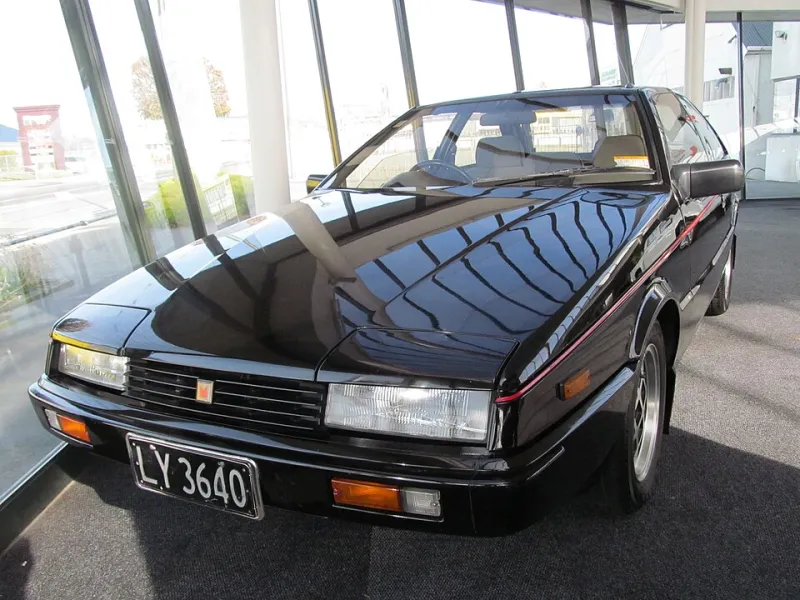
Photo: Shuets Udono, CC BY-SA 2.0, via Wikimedia Commons
The Car Insurance Pricing Assumptions That Keep Driving Buyers to the Wrong Conclusions
It seems like one of the safer assumptions in personal finance: buy a modest, affordable car and keep your insurance costs manageable. Skip the sports car or the luxury SUV if you want a reasonable monthly payment. The logic feels airtight. Cheaper car, cheaper insurance.
Insurance companies don't think this way. They think in claim histories, repair part costs, theft frequency, driver demographic profiles, and litigation exposure — and when those factors are applied to actual vehicles on the road, the results regularly flip the common assumption on its head.
How Insurers Actually Build Your Rate
Before getting into specific examples, it helps to understand what insurance underwriters are actually measuring. When an insurer sets a premium for a particular vehicle, they're not looking at the sticker price and doing simple math. They're building a risk model from several distinct data streams.
Claim frequency tells them how often drivers of that specific model file claims — for collisions, comprehensive losses, liability events, everything. A vehicle driven primarily by young male drivers in urban areas will carry a very different claim frequency than the same-priced vehicle popular with middle-aged suburban commuters.
Repair costs factor in both parts availability and labor complexity. A vehicle with proprietary sensors embedded in every bumper, hood, and door panel costs dramatically more to repair after a minor fender-bender than one with simple sheet metal and standard parts. This matters enormously in the era of advanced driver assistance systems.
Theft rates are tracked by make, model, and sometimes trim level. Some vehicles are targeted disproportionately — often because their parts command high prices in secondary markets, or because older keyless entry systems are easier to defeat. A modest-looking vehicle with a high theft rate carries that risk into every policy written on it.
Medical and liability exposure rounds out the picture. Vehicles involved in more severe injuries — whether due to their own occupant protection or the damage they inflict on others — generate larger claims that get priced into future premiums.
The Affordable Cars That Are Actually Expensive to Insure
Some of the most consistent surprises in insurance pricing show up in the economy and subcompact segments — categories buyers specifically choose to save money.
Certain popular compact SUVs and crossovers carry insurance costs that rival vehicles costing significantly more to purchase, primarily because of repair economics. Modern driver assistance technology — forward collision warning, automatic emergency braking, lane-keep assist — requires sensors and cameras embedded in locations that were previously just plastic and steel. A low-speed parking lot bump that would have cost $400 to repair ten years ago now requires sensor recalibration, camera replacement, and bumper cover work that can run $1,500 to $2,500. That cost shows up in premiums across the entire model line, regardless of trim level.
Some subcompacts have also developed reputations as high-theft targets in specific metro markets. A vehicle that costs $22,000 new but is stolen at three times the national average rate carries a comprehensive insurance burden that buyers rarely anticipate when they're shopping on sticker price.
Certain sporty but affordable coupes — the kind marketed to young buyers on a budget — carry extreme rate penalties because of who typically drives them. Insurers track claims by model, and a vehicle with a driver demographic skewing young and male in high-density areas will carry actuarially justified but still surprising premiums.
The Expensive Cars That Are Cheaper to Insure Than You'd Expect
The flip side is equally counterintuitive. Some vehicles with high MSRPs actually come with more manageable insurance costs than their price tags suggest.
Full-size luxury sedans popular with professional, middle-aged buyers often carry lower claim frequencies than compact vehicles driven by younger demographics — even though the repair costs per incident are higher. Fewer claims at higher dollar amounts can produce a lower total risk profile than frequent claims at moderate amounts.
Certain hybrid and electric vehicles built on safety-first platforms have demonstrated strong occupant protection and relatively low claim severity in real-world data, which eventually works its way into more competitive insurance pricing despite the vehicles' purchase prices.
Some performance vehicles — particularly sports cars purchased by older, wealthier buyers who drive them recreationally rather than daily — carry surprisingly reasonable comprehensive and collision rates. The car sits in a garage most of the time, rarely sees urban congestion, and is driven by someone with decades of clean driving history. The actuarial profile doesn't match the cultural assumption.
What the Industry Doesn't Advertise
Insurance companies have access to decades of claims data sorted by vehicle model, driver age, geography, and dozens of other variables. That data produces pricing that regularly contradicts intuition — and the industry doesn't go out of its way to explain the reasoning, because doing so would invite more aggressive shopping behavior.
The practical consequence is that buyers routinely choose vehicles based on purchase price and fuel economy without ever checking insurance cost — then experience genuine sticker shock when they call their insurer. In some cases, the insurance difference between two similarly priced vehicles can run $400 to $800 per year. Over five years of ownership, that's a meaningful amount of money attached to a decision most people made without the information.
What to Actually Check Before You Buy
The fix is simple and takes about ten minutes. Before you commit to any vehicle, get an insurance quote on that specific year, make, model, and trim level. Most major insurers allow you to run quotes without a VIN — just the model information — so you can compare vehicles before you've signed anything.
Pay particular attention to comprehensive and collision components if you're financing or leasing, since those coverages are typically required. Also check whether the vehicle you're considering has recently added technology features that might not yet be fully reflected in current premiums but will be at your next renewal.
Third-party tools like the Insurance Institute for Highway Safety's claims data — which is publicly available — can also give you a model-level view of how a specific vehicle performs across different claim categories.
The real takeaway: Insurance pricing is actuarial logic applied to real claims data, not a direct function of purchase price. The affordable car you bought to save money might be costing you hundreds of dollars a year more than a pricier alternative — and you'd never know unless you checked. Add insurance quotes to your vehicle research process before you fall in love with a specific model.