That Little Fuel Light Isn't the Emergency You Think It Is
That Little Fuel Light Isn't the Emergency You Think It Is
There's a specific kind of stress that comes with watching your fuel gauge creep toward empty on a stretch of highway with no exit in sight. And the second that little orange light pops on? Most people immediately shift into mild panic mode — white-knuckling the wheel, doing mental math on how far the next town is, and questioning every life decision that led to this moment.
But here's the thing: you almost certainly have more runway than you think.
What Your Gauge Is Actually Telling You
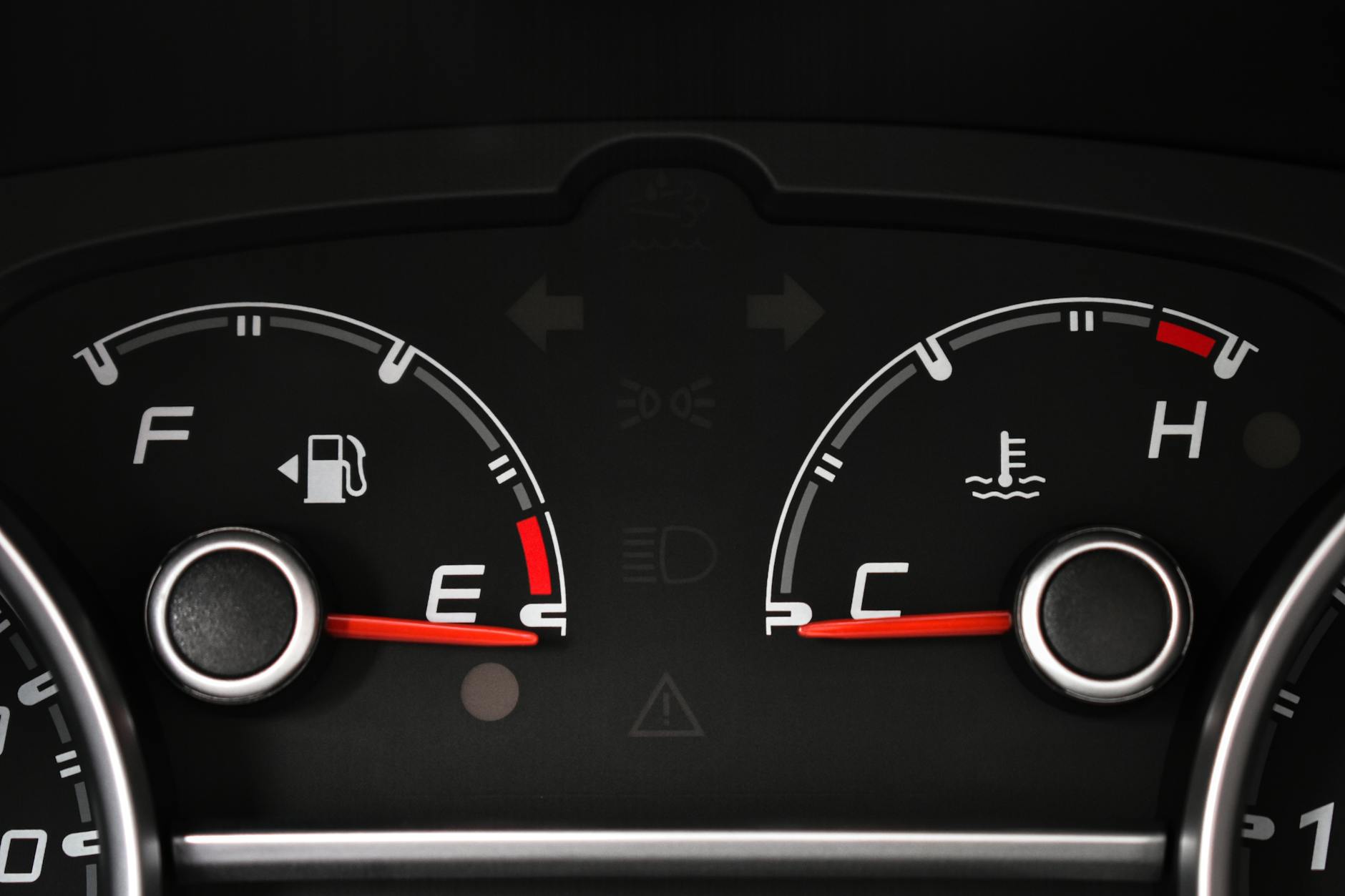
The fuel gauge in your car is not a precise scientific instrument. It's an approximation — a float-based sensor sitting in your tank that gives the dashboard a general read on fuel levels. And automakers have deliberately engineered those readings to be conservative.
When your gauge hits "E," there's still fuel in the tank. When the warning light comes on, there's even more than that. Most manufacturers program the low fuel warning to trigger when somewhere between one and three gallons remain, depending on the vehicle. That's not an accident or an oversight. It's intentional design.
The engineering logic is straightforward: the fuel pump in a modern car sits submerged in the tank, and it relies on gasoline to keep it cool. Running a tank completely dry doesn't just leave you stranded — it can overheat and damage the pump itself. The reserve buffer protects the hardware as much as it protects the driver.
How Much Is Actually Left?
This is where it gets genuinely useful. The margin you have after the warning light comes on varies quite a bit depending on what you drive.
Smaller sedans and economy cars — think a Honda Civic or a Toyota Corolla — typically have somewhere between 30 and 45 miles of range after the light activates. Larger vehicles with bigger tanks, like full-size trucks or SUVs, can carry even more reserve fuel, though their lower fuel economy means that buffer doesn't always translate to significantly more miles.
A few real-world examples worth knowing:
- Ford F-150: Often has 1.5 to 2 gallons remaining when the light comes on, which at highway speeds can mean 35–50 miles depending on load and conditions.
- Toyota Camry: Typically triggers the light with about 2.6 gallons left — that's roughly 40 to 50 miles of normal driving.
- Chevy Silverado: Reserve can run close to 2 gallons, but the truck's thirst for fuel means the mileage buffer is more modest.
You can actually find the specific reserve capacity for your vehicle in the owner's manual, or look it up through your automaker's website. It's one of those details buried in documentation that most people never read but would find incredibly handy.
Why the Myth Persists
So why do so many drivers treat the warning light like a five-alarm emergency?
Partly, it's conditioning. The light is designed to feel urgent — it's orange, it's a symbol of a gas pump, and it shows up at the worst possible moments. The anxiety it triggers is kind of the point. Automakers want you to feel motivated to refuel, not comfortable coasting on fumes for another 80 miles.
Partly, it's also the fact that "reserve" isn't a number anyone advertises. Gas pump manufacturers don't post it on the handle. Dealerships don't mention it during the sale. So the assumption fills the vacuum: light on means almost out.
There's also real variation in how different cars behave. Older vehicles, particularly those from the pre-digital era, had much less predictable gauges and more inconsistent reserve levels. Drivers who learned on those cars carried that uncertainty forward, and it stuck.
What You Should Actually Do
None of this is an argument for routinely running your tank down to the wire. Habitually driving on fumes does stress the fuel pump over time, and if you're in a rural area or stuck in unexpected traffic, that buffer shrinks fast.
But the practical takeaway is this: if the light comes on and you're not near a station, you don't need to panic. You have time. Check your navigation app for the nearest gas station, drive at a steady speed to maximize efficiency, and avoid aggressive acceleration. You're almost certainly not about to coast to a stop.
Knowing your specific vehicle's reserve capacity — which again, is in your owner's manual — turns that anxious guess into an informed decision. That's a small piece of knowledge that can genuinely change how a stressful moment on the road feels.
The light isn't a countdown to disaster. It's a heads-up with a cushion built in. Automakers just never really got around to telling you that.