That Little Fuel Light Isn't the Emergency You Think It Is
That Little Fuel Light Isn't the Emergency You Think It Is
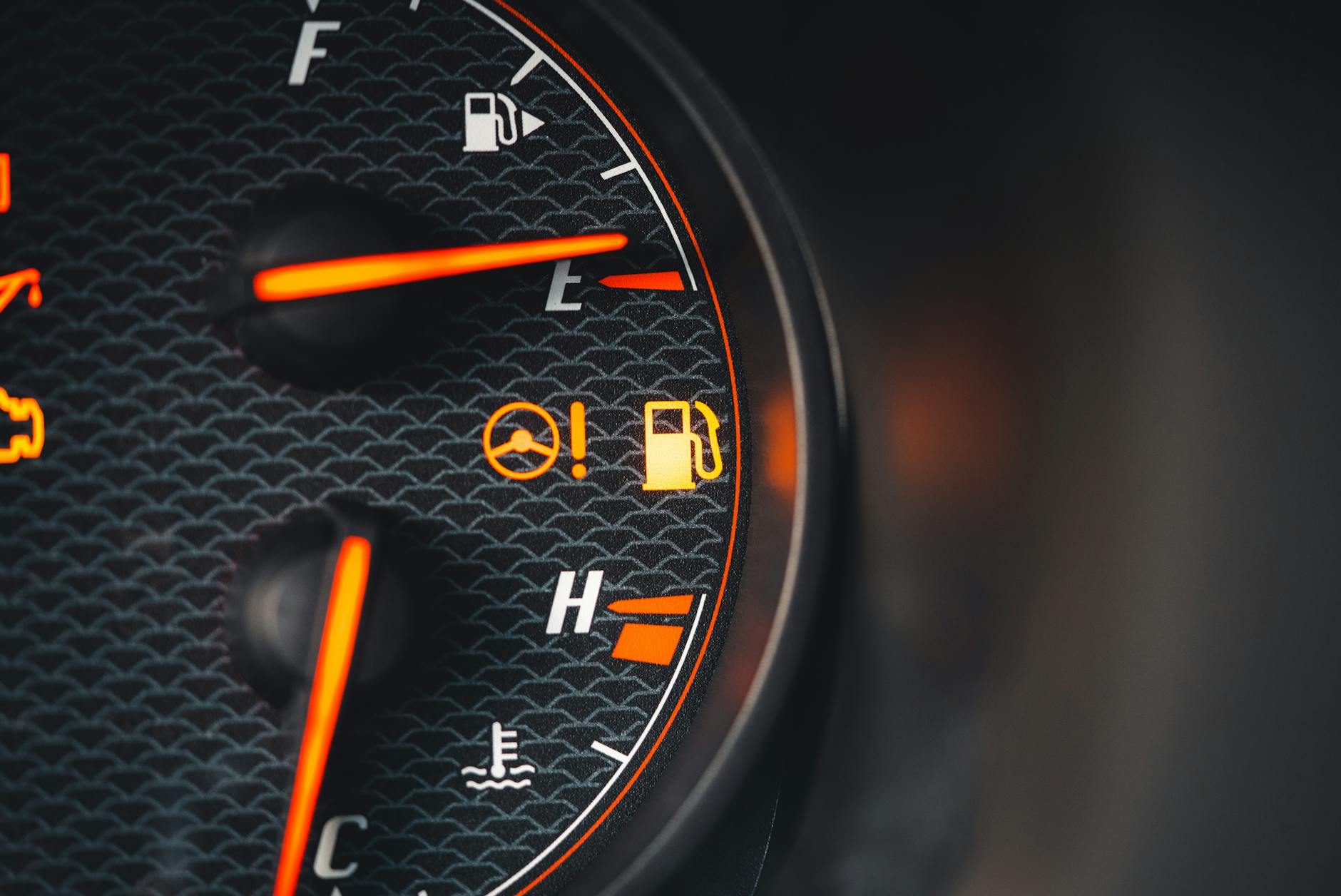
There's a particular kind of stress that hits when you're cruising down the highway, miles from the next exit, and that little amber fuel pump icon decides to light up on your dashboard. Heart rate goes up. You do the mental math. You start wondering how embarrassing it would be to coast to a stop on the shoulder of I-95 with a trail of annoyed drivers behind you.
Here's the part nobody told you: that moment of panic is almost always unnecessary. Your car has more gas left than you think — often a lot more.
What That Warning Light Is Actually Telling You
The low fuel warning light is not a countdown to zero. It's a heads-up. A nudge. Think of it less like a fire alarm and more like a calendar reminder that says "hey, you should probably handle this today."
Most vehicles sold in the United States are engineered with a reserve buffer built directly into the fuel system. When that warning light activates, the typical car still has somewhere between 30 and 50 miles of range remaining — sometimes more, depending on the make, model, and how you're driving. Larger trucks and SUVs tend to have even more cushion, simply because their tanks are bigger to begin with.
This isn't a secret, exactly, but it's not something automakers advertise loudly either. You won't find a sticker on the dashboard that says "Relax, you've got 40 miles." And that ambiguity, as it turns out, is pretty intentional.
Why Manufacturers Keep the Exact Number Fuzzy
If car companies know how much reserve fuel is left when the light comes on, why don't they just tell you?
The short answer is that they don't want to. Not because they're hiding something sinister, but because driver behavior is unpredictable, and giving people a precise number creates a new problem.
Imagine your dashboard displayed the message: "38 miles remaining." A certain percentage of drivers would treat that as a challenge. They'd push it to 35. Then 32. Then they'd misjudge their commute and end up stranded anyway. By keeping the reserve range intentionally vague, automakers nudge drivers toward refueling sooner rather than gambling on the exact limit.
There's also the reality that fuel economy varies constantly. Your reserve range on the highway at 65 mph is very different from the same reserve range in stop-and-go city traffic. A fixed number would be misleading in one scenario or the other. Vagueness, in this case, is actually the more honest approach.
How the Reserve System Works
Your fuel gauge doesn't measure gas the way a ruler measures length. The float sensor inside your tank that feeds information to the gauge is deliberately calibrated to read "empty" before the tank is actually empty. Engineers set that threshold to trigger the warning light when a specific volume of fuel remains — typically somewhere between one and two gallons, depending on the vehicle.
Some modern cars take this a step further with a digital range estimate, that "miles to empty" readout you might have on your instrument cluster. Those estimates are calculated in real time using your recent fuel consumption history, which is why the number can fluctuate. Hop on the highway after a week of city driving and watch that range estimate climb.
The warning light itself usually activates a bit before that estimated range hits zero, adding yet another layer of buffer. So by the time you're staring at "0 miles to empty," most cars will still physically move — though that's obviously not a test worth running.
The Habit That Developed Around the Light
For a lot of American drivers, the fuel light triggers an almost Pavlovian response — immediate anxiety, an urgent search for the nearest gas station, and a firm mental rule never to let it happen again. That response isn't irrational. Running out of gas is genuinely inconvenient, and in the wrong situation, it can be unsafe.
But the outsized panic around the warning light comes partly from how the feature was introduced. Early fuel warning systems in the 1970s and early 1980s were far less sophisticated, and the buffer they provided was much smaller. Drivers who learned on those older vehicles passed down the lesson: when the light comes on, stop everything and find gas. That advice made sense then. It just never got updated.
There's also the psychological weight of uncertainty. Because nobody tells you exactly how much you have left, the unknown feels worse than it is. The brain fills the information gap with worst-case scenarios.
What to Actually Do When the Light Comes On
Take a breath. Check your surroundings. If you're in a city or suburb, you almost certainly have enough fuel to reach a station without any drama. If you're on a rural stretch of highway, start paying attention to exit signs, but you're still not in immediate trouble.
The one habit worth building is simply refueling before you hit the light regularly. Most mechanics and manufacturers suggest not letting your tank drop below a quarter full as a routine practice — not because the reserve is unreliable, but because consistently running low can accelerate wear on your fuel pump, which sits inside the tank and uses gasoline itself as a coolant.
But if the light catches you off guard on a Tuesday morning? You've got time. That's exactly what it was designed to give you.