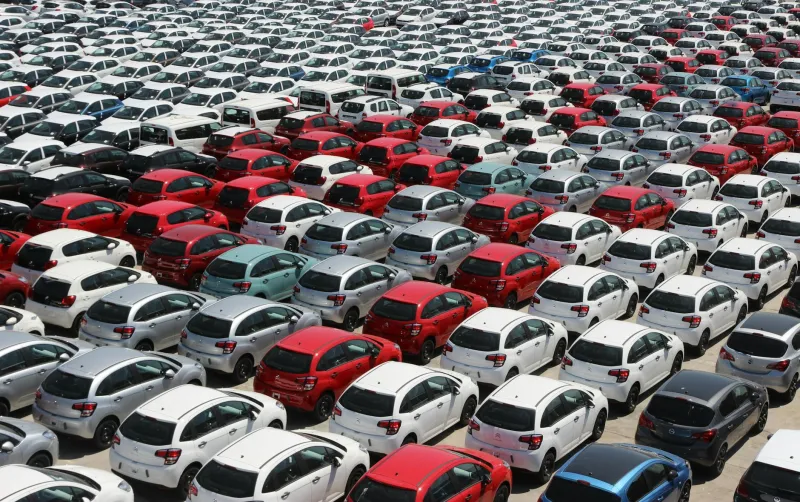
It's become the most repeated piece of automotive financial wisdom: "Never buy new—a car loses thousands of dollars the moment you drive it off the lot." This warning gets passed around with the confidence of a mathematical law, repeated by financial advisors, family members, and pretty much anyone who's ever bought a car.
But here's the problem with treating this advice as gospel: it's based on outdated assumptions and ignores half the financial equation.
The Myth of Instant Depreciation
The "drive off the lot" warning stems from a real phenomenon, but it's not as dramatic as the folklore suggests. Yes, new cars do depreciate faster in their first year than in subsequent years. However, the idea that you lose $5,000 or $10,000 the instant you sign the paperwork is a dramatic oversimplification.
What actually happens is more gradual. A new car's value does drop once it becomes "used," but this happens over weeks and months, not seconds. More importantly, this initial depreciation hit has to be weighed against what you're actually getting for that money—something the blanket "never buy new" advice completely ignores.
The Hidden Costs of "Smart" Used Car Buying
Here's where the conventional wisdom gets really problematic: it treats the sticker price difference as the entire story. In reality, used cars come with their own financial risks that can easily exceed any depreciation savings.
A three-year-old vehicle might cost $8,000 less than its new equivalent, but it also comes with $8,000 worth of wear and tear that you'll eventually pay for. That timing belt replacement, transmission service, and brake job aren't going away—you're just buying someone else's deferred maintenance.
Used car buyers also face financing realities that new car shoppers often avoid. While manufacturers regularly offer 0% or 1.9% financing on new vehicles, used car loans typically run 4-8% higher. On a $25,000 purchase, that interest rate difference can cost you $3,000-$5,000 over the life of the loan—suddenly, that depreciation savings doesn't look so impressive.
When New Cars Actually Make Financial Sense
Contrary to the blanket advice, there are plenty of scenarios where buying new is the smarter financial move:
Long-term ownership plans: If you're planning to keep a car for 8-10 years, the initial depreciation becomes a smaller percentage of your total ownership cost. You get the benefit of full warranty coverage during the expensive early repair years, and you know exactly how the car has been treated.
Reliability-critical situations: If missing work due to car trouble would cost you income, the reliability difference between new and used can have real financial value. A $500 towing bill and missed workday can quickly eat into used car savings.
Low-mileage drivers: The standard depreciation calculations assume average mileage. If you drive less than 10,000 miles per year, your car will hold its value better than the typical depreciation curves suggest.
Technology adoption: Modern safety and fuel efficiency features can provide ongoing financial benefits that older used cars simply can't match. The fuel savings from a hybrid system or the insurance discounts from advanced safety features add up over time.
The Financing Reality
The depreciation warning also ignores how most people actually pay for cars. If you're financing a vehicle, you're not paying the full purchase price upfront, so you're not immediately "losing" the full depreciation amount.
Consider this scenario: You buy a $30,000 new car with $3,000 down and finance the rest at 2%. Your immediate out-of-pocket cost is $3,000, not $30,000. Even if the car is worth $25,000 after a year, you haven't actually "lost" $5,000—you've made 12 monthly payments and received 12 months of transportation.
The Used Car Market Reality Check
The "buy used" advice also assumes you can find a good used car at a fair price, which has become increasingly difficult. The used car market has been distorted by everything from rental car fleet changes to supply chain disruptions. Quality used cars often sell quickly and at premium prices, leaving buyers with either overpriced options or vehicles with hidden problems.
Meanwhile, manufacturer incentives on new cars can be substantial. Cash rebates, low financing rates, and lease deals can bring the effective cost of a new car well below its sticker price. When a manufacturer is offering $5,000 cash back plus 0% financing, the actual cost difference between new and used shrinks considerably.
The Maintenance and Warranty Factor
New car buyers get something used car buyers don't: predictable costs. For the first 3-5 years, your maintenance expenses are largely limited to oil changes and basic service. Used car buyers immediately inherit someone else's maintenance schedule and potential problems.
Warranty coverage also has real financial value that depreciation calculations ignore. Knowing that major repairs are covered for several years provides both peace of mind and budget predictability. Used car extended warranties, when available, are typically more expensive and less comprehensive than factory coverage.
Making the Real Calculation
Instead of following blanket advice, smart car buyers need to run the actual numbers for their specific situation:
- Compare total cost of ownership, not just purchase price
- Factor in financing rates, insurance costs, and maintenance expectations
- Consider your driving patterns, income stability, and how long you plan to keep the car
- Account for manufacturer incentives and local market conditions
The truth is, sometimes buying new makes perfect financial sense, and sometimes it doesn't. The answer depends on your specific circumstances, not on automotive folklore.
The next time someone warns you about new car depreciation, ask them to show you the complete financial analysis. Chances are, they're repeating advice that's based on assumptions that don't match your situation—or the current automotive market.