The Tire Pressure Number That's Sabotaging Your Car (And Your Wallet)
There's a number printed on the sidewall of every tire that millions of drivers treat as gospel truth. It's usually something like "MAX PRESS 44 PSI" or "MAX 35 PSI," and it seems logical enough—if the tire company put it there, that must be what you're supposed to use, right?
Wrong. And this misunderstanding is quietly costing American drivers hundreds of millions of dollars every year in wasted fuel, premature tire wear, and compromised handling.
The Number You're Reading Wrong
That prominent number on your tire sidewall isn't a recommendation—it's a warning. It tells you the maximum pressure that tire can safely handle, not the optimal pressure for your specific vehicle. Think of it like the speed limit on a tire: just because it can handle 44 PSI doesn't mean that's what you should actually use.
The pressure you actually need is hiding in plain sight, printed on a sticker inside your driver's door jamb (or sometimes in the glove box or fuel door). This vehicle-specific number is typically 5-15 PSI lower than the tire's maximum, and using it instead of the sidewall number can dramatically improve your car's performance and your wallet's health.
Why This Confusion Exists
The tire pressure mix-up is understandable. The sidewall number is big, bold, and impossible to miss. The door jamb sticker is small, often faded, and located somewhere most drivers never look. It's classic bad design—the most prominent information isn't the most useful information.
This problem got worse as tire technology improved. Modern tires can handle much higher pressures than older designs, so those sidewall maximums keep creeping upward. Meanwhile, vehicle manufacturers are specifying lower pressures to optimize comfort, handling, and fuel economy for their specific cars. The gap between what the tire can handle and what the car actually needs has grown wider.
The automotive service industry hasn't helped clarify things. Many quick-lube places and gas station attendants default to the sidewall number because it's easier to find than hunting for door jamb stickers on dozens of different car models. Some drivers have been running over-inflated tires for years without realizing there's a better way.
The Real Cost of Over-Inflation
Using maximum tire pressure instead of recommended pressure creates a cascade of problems that add up to serious money over time.
Premature tire wear is the most obvious issue. Over-inflated tires wear faster in the center of the tread, creating an uneven pattern that shortens tire life. Since a set of tires can cost $600-$1,200, getting 40,000 miles instead of 60,000 miles represents hundreds of dollars in premature replacement costs.
Fuel economy actually gets worse with over-inflation, despite what many drivers believe. While under-inflated tires definitely hurt gas mileage, over-inflated tires reduce the tire's contact patch with the road, making the engine work harder to maintain traction. The sweet spot for fuel efficiency is right at the manufacturer's recommended pressure.
Handling and safety suffer when tires are over-inflated. The reduced contact patch means less grip during braking and cornering. Over-inflated tires also transmit more road shock to the suspension, potentially accelerating wear on expensive components like struts and ball joints.
The Door Jamb Secret
That little sticker inside your driver's door contains pressure recommendations that were determined through extensive testing by your vehicle's engineers. They considered your car's weight distribution, suspension design, expected load capacity, and handling characteristics to arrive at the optimal pressure for front and rear tires.
This number is usually expressed as "cold" pressure, meaning the pressure when tires haven't been driven for at least three hours. As tires heat up from driving, pressure increases—which is normal and expected. The cold pressure recommendation accounts for this, ensuring proper pressure when the tires are at operating temperature.
Many vehicles specify different pressures for front and rear tires, reflecting the different loads and handling requirements. Using the same pressure front and rear (especially the tire's maximum pressure) ignores this engineering and can create handling imbalances.
The Seasonal Pressure Problem
The tire pressure confusion gets worse with seasonal temperature changes. For every 10-degree temperature drop, tire pressure decreases by about 1 PSI. Drivers who set their pressure to the sidewall maximum in summer can end up with dangerously over-inflated tires when winter arrives and they add more air without checking the baseline.
This seasonal variation is another reason why the door jamb pressure is more practical than the sidewall maximum. Vehicle engineers account for typical temperature swings when setting recommendations, providing a target that works year-round with minor seasonal adjustments.
How to Get It Right
Fixing the tire pressure problem is surprisingly simple once you know what to look for:
Find your vehicle's actual recommendation on the door jamb sticker, not the tire sidewall. If the sticker is missing or unreadable, check your owner's manual or the manufacturer's website.
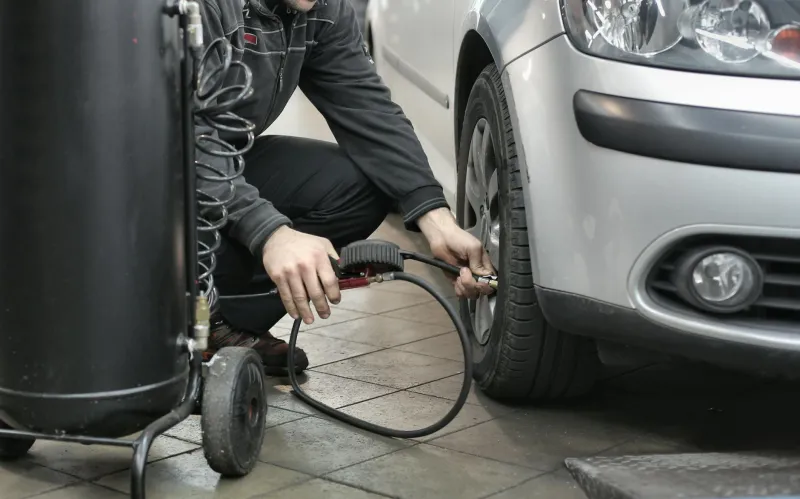
Check pressure when tires are cold, ideally first thing in the morning before driving. Gas station air pumps are fine, but invest in a decent tire gauge—the built-in gauges on air hoses are notoriously inaccurate.
Adjust seasonally by adding or removing air as temperatures change. A good rule of thumb is to check and adjust tire pressure monthly, or whenever the seasons change.
Don't forget the spare tire, which often requires higher pressure than your regular tires and should be checked periodically even if you never use it.
The Bottom Line
The tire pressure confusion is one of those automotive mistakes that's incredibly common but easily fixed. Simply switching from the sidewall maximum to the door jamb recommendation can improve your fuel economy, extend tire life, and make your car handle better.
It's a perfect example of how automotive knowledge that seems obvious often isn't. The biggest, most prominent number isn't always the right number—sometimes the most important information is hiding on a small sticker that most drivers never notice.
The next time you're adding air to your tires, skip the sidewall and head straight for the driver's door. Your car—and your wallet—will thank you for reading the right number.