The Single Biggest Factor in How Long Your Car Lasts Has Nothing to Do with the Brand
Every year, millions of Americans make car-buying decisions based on reliability ratings. They study J.D. Power scores. They read the Consumer Reports annual auto issue. They ask friends which brand "lasts the longest." And then they buy a car, drive it in the specific climate where they live, and wonder years later why their supposedly bulletproof vehicle is falling apart while their neighbor's less-celebrated brand is still going strong.
The conversation almost nobody is having: where a car lives may matter more than what it is.
The Variable That Reliability Surveys Miss
Reliability data is collected nationally and reported as aggregate scores. A Toyota Camry's reliability rating reflects ownership experiences from Phoenix to Portland, from Miami to Minneapolis. It's an average — and like most averages, it smooths over the extreme ends of the range.
What it doesn't capture is the environmental punishment that separates a car's experience in Buffalo, New York from the same model in Tucson, Arizona. These two cars might as well be living on different planets. One faces road salt from November through March, freeze-thaw cycles that work moisture into every seam and crevice, and humidity that never fully lets metal dry out. The other bakes in dry heat, sits on roads that haven't seen a salt truck in decades, and rusts at a pace that can generously be described as geological.
The Camry in Tucson might genuinely run for 300,000 miles with minimal drama. The Camry in Buffalo might be structurally compromised before it hits 120,000. Same model year. Same rating. Completely different lives.
Salt Is the Variable Nobody Prices In
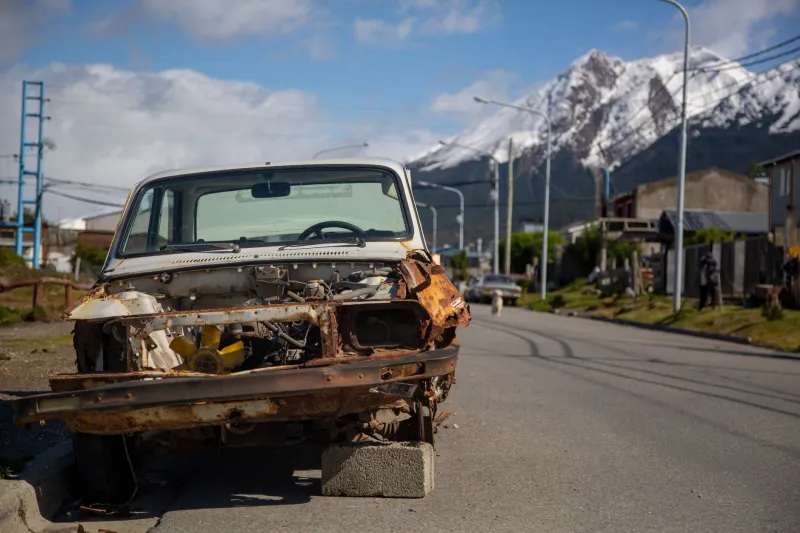
Road salt is the dominant environmental threat to vehicle longevity in the northern United States, and its effects are both dramatic and underappreciated. States like New York, Michigan, Ohio, Pennsylvania, and Illinois use hundreds of thousands of tons of road salt annually. That salt doesn't stay on the road surface — it gets kicked up into wheel wells, packed into frame cavities, and deposited in every place water can carry it.
The chemistry is straightforward and brutal. Salt accelerates the electrochemical reaction that causes iron to oxidize. A car that might take fifteen years to show surface rust in a dry climate can show structural corrosion in five to seven years in a heavy-salt region. This isn't about cosmetic rust on the body panels — it's about subframe integrity, brake line corrosion, fuel line failure, and the structural components that hold your car together in an accident.
Here's the regional reality that reliability ratings never tell you: a "less reliable" domestic truck from a Detroit manufacturer, built with rust-resistant coatings and frame treatments specifically calibrated for American road conditions, may outlast a top-rated Japanese sedan in the Rust Belt simply because of how its undercarriage was engineered. Brand reputation doesn't survive contact with Syracuse winters indefinitely.
Garaging Your Car Is Worth More Than an Extended Warranty
If you want a single behavioral change that will extend your vehicle's life more than almost any other decision, it's this: put it in a garage.
A garaged car experiences dramatically fewer freeze-thaw cycles. It doesn't sit in standing water after a storm. It doesn't accumulate condensation on cold metal surfaces night after night. In humid coastal climates — think the Gulf Coast, the Carolinas, or the Pacific Northwest — a garage protects against the salt air and moisture that attack paint and metal even without road salt involvement.
Studies on vehicle depreciation consistently show that garaged vehicles hold their value better, show less wear, and have lower rates of rust-related repair costs. An extended warranty on a car parked outside in Cleveland is, in a real sense, a financial product designed to address a problem that a garage would have largely prevented.
This sounds obvious. But it's a variable that almost nobody factors into their purchase decision. People spend weeks comparing brands and months saving for a down payment, then park a $35,000 vehicle outside because the garage is used for storage.
What Buyers in Different Regions Should Actually Prioritize
The practical implications of this shift in perspective are significant.
If you're in the Rust Belt or upper Midwest: Undercoating and rust-proofing treatments are worth serious consideration — not the dealer's spray-and-charge version, but a proper rustproofing service from a reputable shop. Check the vehicle history on any used car for its geographic origin. A car that spent its first six years in Georgia is a fundamentally different purchase than one that wintered in Michigan, even if the carfax mileage is identical.
If you're in the humid South or coastal regions: Rust is still a threat, just a slower one. Electrical systems and rubber components suffer more from heat and humidity than in dry climates. The "reliable" vehicles in your region may differ from what tops the national ratings.
If you're in the arid Southwest: You're living in the closest thing to a car preservation environment that exists in the United States. Vehicles genuinely do last longer here, which is why used-car buyers from wetter climates specifically seek out Southwest-origin vehicles. The brand matters less; the climate is doing most of the work.
The Takeaway
Reliability ratings are useful, but they're a national average applied to a local reality. A car's longevity is shaped by the roads it drives on, the weather it sleeps through, and whether it has four walls and a roof to come home to at night. The best car for someone in Albuquerque is not necessarily the best car for someone in Cleveland — and no reliability survey is going to tell you that. Your zip code might be the most important spec sheet nobody's reading.